Tuesday, October 31, 2017

Homecoming Part II


Our  hearts were made for You, 
O Lord,
and they are restless 
until they rest in you. 


                                          St. Augustine


If you read this space with any frequency you know that one of its main purposes is to highlight connections between the music we sing and the day’s scripture.  You will also be quick to notice the connections between each Sundays’ first reading and gospel. 

In today’s readings both the prophet Malachi and Jesus are critical of the religious leaders of the day.   Paul’s tender words to the church at Thesalonika stand in stark contrast to these aforementioned leaders who do not keep the ways of the Lord and fail to be impartial in their decisions.

A second way of viewing today’s readings is to see how they fit into the scripture selections for the liturgical year.  With this in mind, I point you to the gospel for the last Sunday of the liturgical year:  The Solemnity of Christ the King   Matthew25:31

Jesus tells us The Son of Man….will separate them from one another, as a shepherd separates the sheep from the goats.   The basis of this evaluation will be how they/we have cared for His “least ones.”

During our gathering over the next several weeks we will be singing the Litany of the Saints by John D. Becker (#717).  I’ve chosen it to both honor, petition and seek the inspiration of these ordinary men and women who have lived extraordinary lives.

Peace,

Bruce


Would you like to have your loved one remembered this November at St. Mary's?  Bring a picture to be displayed on our memory boards.   There is a basket at the front door of he church.  Be sure to put your name, phone number and e-mail address on the back of the picture.  Pictures can also be dropped off at the parish center.

Monday, October 23, 2017

Homecoming


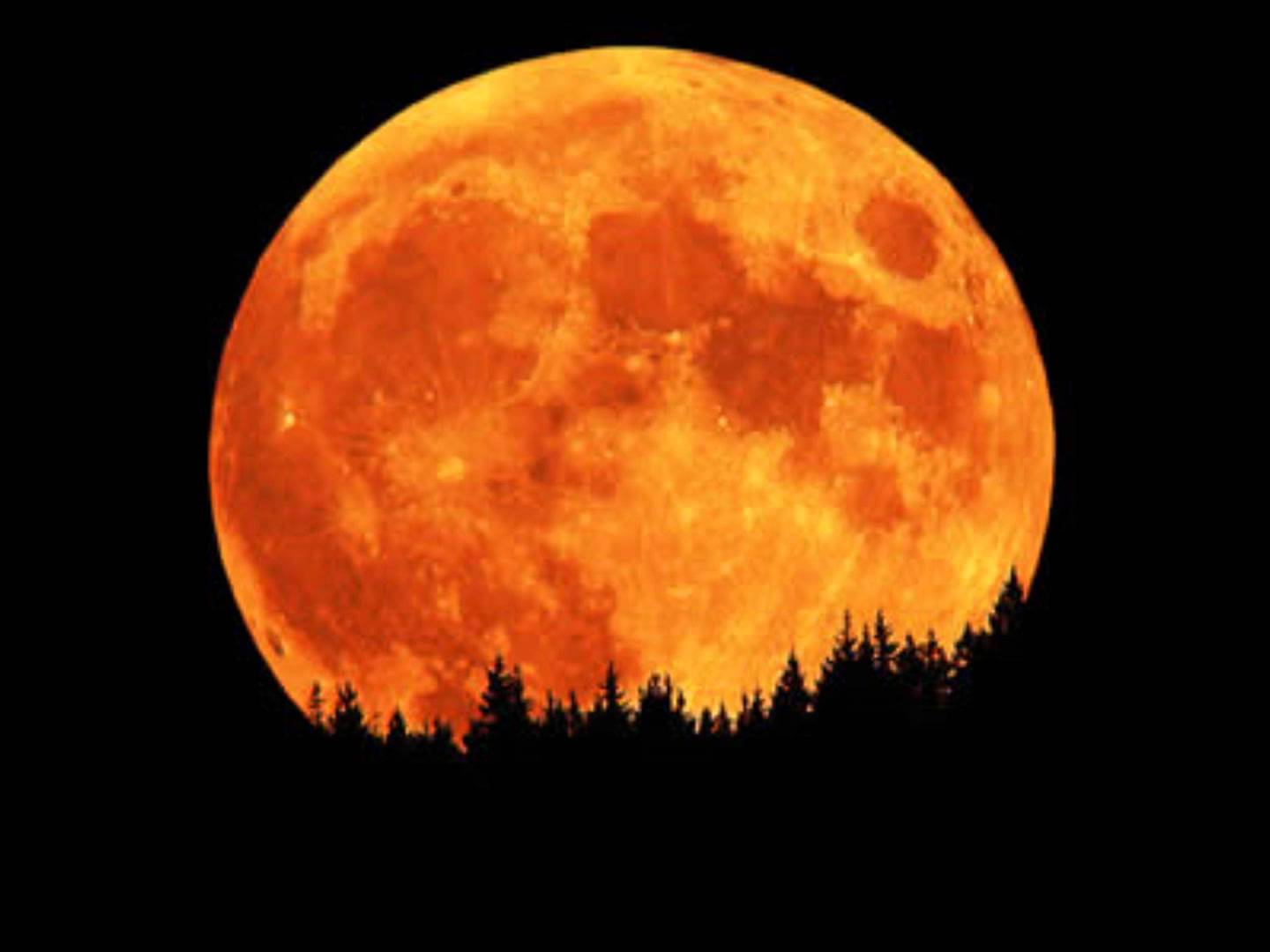
There’s something about this time of year.  It may be the alarm clock that rings before the sun rises.  Or way the moon dominates the early evening sky.  Perhaps it’s the signs of Halloween that (thanks be to God) hold the Christmas rush at bay for at least another week. 

There’s something about this time of year.  Despite the pushing of daylight savings time into November and nature’s recent resistance to change to its fall colors.

For me this “something” is wrapped in the celebrations of November.  It can be explained with one word:  Homecoming. 

Suddenly I’m a little boy pushing the silver button to call the elevator.  I step on and see 2 rows of 7 black buttons and one red button.  They look like thick checkers.  Never push the red button; only in an emergency.  I find the button next to the number 3 and push.   We get off the elevator and I ring the bell on the door to apartment 3E.  My grandmother looks through the peephole and quickly opens the door.  There’s no place like grandma and grandpa’s home for the holidays.

Just as thoughts of Thanksgiving connect me with my grandparents; the Solemnity of All Saints and the Commemoration of the Faithful Departed connect us with our deceased loved ones who are at the heavenly banquet.

Consider the words of Pope Francis:

The feasts of All Saints and All Souls are "days of hope."  The virtue of "hope is like a bit of leaven that enlarges your soul. There are difficult moments in life, but with hope you go forward and keep your eyes on what awaits us. “

*****

St. Mary’s is planning on creating memory boards with pictures of our beloved deceased to be collected and displayed during the month of November.  There will be a box at the front door of the church in which you can place pictures.  

If you can help either planning, designing, implementing or creating the boards please contact me at b.mauro1@yahoo.com or by calling the parish center at (973) 235-1100. 

In gratitude and hope,

Bruce


Wednesday, October 18, 2017

Hail Mary, Full of Grace

Hail Mary, Full of Grace

You may have noticed a subtle change in the music before mass during October. Our prelude has been different settings of the Hail Mary. Before saying more about the “what” allow me to share a bit on the “who” and “why.”

On September 1, 1883 Pope Leo XIII consecrated the upcoming October to Mary as the Queen of the Holy Rosary. In his encyclical “On Devotion to the Rosary” he exhorted the faithful to pray the rosary before mass. Over the next 15 years Leo XIII wrote ten more encyclicals on the rosary.

So, what is a setting? One way to explain this uses the analogy of an engagement ring where the stone is set into the ring. In this analogy the stone is the Hail Mary and the ring is the various musical compositions into which the prayer is set.

There are many, many settings of the Ave Maria.

Here are the ones we have used:

Ave-Maria Bach-Gounod
Gounod, an organist and choirmaster from Paris, wrote this setting during the mid-nineteenth Century. He “superimposed” his memorable melody on the famous “Prelude in C Major” written by Johann Sebastian Bach. (Those who have taken piano lessons may be familiar with Bach’s Well-Tempered Clavier.)

Ave-Maria - Daniel Kantor
Daniel Kantor is a contemporary composer, musician and graphic designer.  He is also responsible for the naming and marketing of the well-known music publishing software: Finale. 

Here are the composers’ words on his setting of the Ave Maria:

“Growing up, I learned my father’s favorite prayer was the Hail Mary. I associate this prayer with him, and his upbringing on a small hard-working Minnesota farm. The stories I recall of Mary and Joseph, two humble people, resonate with this. So I crafted a setting of the Hail Mary that is reminiscent of a slow country waltz with an accessible refrain that any assembly can sing. This setting contrasts with the more formal Ave Maria’s so often used at weddings.”

Hail Mary-Gentle Woman - Carey Landry
This setting written in 1975 by the composer of “Abba, Father” and “Only A Shadow.” It is both simple in its melody and chord progression.  It is also easy to sing and well-loved by many.

Ave Maria - Franz Schubert
Arguably the post popular setting of the Ave Maria was not originally written for the prayer. Schubert wrote the melody for a secular poem published by Sir Walter Scott in 1810. At some point in time the words to the prayer were set into Schubert’s music.

Blessed to be at St. Mary’s another October,

Bruce

Addendum

I remember playing the music for the Rosary societies "Living Rosary" each October at my home church.  I can see the ladies, including my mom in their white blouses standing around the church in darkness.  Angela Failla would walk with a lit candle and light the taper for each member as they began their individual Hail Mary.  I could tell who some of them were just by their voice.

   
PS

This past Sunday 3 children came forward after mass with their parents hoping to join the children’s choir.  Children grades 3-8 are invited to join.  For more information go to https://sites.google.com/view/stmaryschildrenschoir/home or E-mail me at b.mauro1@yahoo.com .


Tuesday, October 10, 2017

It's Like........


Have you ever used this phrase when struggling to explain something? Have you ever caught yourself, or someone else inserting this phrase into every sentence? Doesn’t it get.....like.....annoying?

In today’s gospel Jesus uses this term in a very different way: with ultimate clarity. The kingdom is like (or rather) “.....may be likened to a king who gave a wedding feast for his son.” Matt. 22:2

The prophet Isaiah describes a mountain-top feast with similar clarity. On this mountain the Lord of hosts will provide for all peoples a feast of rich foods and choice wines, juicy rich foods and pure choice wines. Is. 25:6

Psalm 23 gives us more images: green pastures, still waters, a table set. The verse we repeat connects us to the theme of all three readings - a vision of salvation.  I shall live in the house of the Lord all the days of my life.  Ps 23:6b

We Come to Your Feast reminds us that in the Eucharist we share in God’s kingdom here and now. “By the Eucharistic celebration we already unite ourselves with the heavenly liturgy and anticipate eternal life when God will be all in all” (Catechism of the Catholic Church). Perhaps some of you will remember it from the liturgies in which we celebrated the first Holy Communion of our children.

The Lord is My Shepherd is a contemporary version of psalm 23 by Josh Blakesley.  The repetitive refrain is mantra-like and an excellent setting for the Communion procession.

Peace,

Bruce

PS
Our adult choir and children’s choir are seeking new members. Rehearsals take place on Sunday mornings. For more info go to


Saturday, October 7, 2017

A Shelter in the Time of Storm

Liturgical Notes

I arrived at the decision to not submit this weekly article last Monday as I enjoyed the last day of a family golf weekend.  My e-mail to Andrew, our editor playfully announced; “I would be taking a Mulligan.”  The deadline came and went as details on the tragic shootings in Las Vegas came to light.   

The next morning I revisited my original selections for this weekend’s music. My original choice for entrance hymn needed to be changed.  Beginning liturgy with a rousing and joyful setting of psalm 118 (This is the Day #568) seemed inappropriate.

My revised choice is the spiritual found on the other side of this page; “A Shelter in the Time of Storm.” The original text by Vernon Charlesworth contains familiar images that can be found throughout scripture.  They depict God as constant, present and strong or to use a contemporary term; rock-solid.  The verse comes from Isaiah 25:4 reminding us that God watches over us and “is a shelter from the rainstorm and a shade from the heat”.   The writer of the original hymn-tune, Ira Shankey was inspired by the singing of the fisherman off the north coast of England as they returned to the safety of the harbor chased by storm clouds.  

The version that we will sing is an adaptation by Rev. Jan Michael Joncas.  Fr. Joncas was ordained a priest for the Archdiocese of St. Paul - Minneapolis, MN in 1980.   He is an Associate Professor at the University of St. Thomas, St. Paul, MN teaching in both the Department of Catholic Studies and the Department of Theology.   He also teaches in the Liturgical Studies faculty of the Department of Theology at the University of Notre Dame, Notre Dame, IN.  You will probably recognize some of his other compositions which include:  We Come to Your Feast, I have Loved You and On Eagles Wings.

I’ve spent the week playing and praying this hymn in order to prepare it for liturgy.  I’ve also thought about how I might explain my rationale for its use as gathering/processional hymn.

The first question is; “Why make a change based on an event?”  The answer is contained in the timeliness and timelessness of liturgy.   We come to liturgy at a particular moment in human history as well as our own our life’s journey.  We simultaneously step out of time to connect with a God who is unbound by time.  … But do not ignore this one fact, beloved, that with the Lord one day is like a thousand years and a thousand years like one day.” 2 Peter 3:8

The second question is; “Why this song?”  For me the answer lies in a faith that God is and continues to be with us in times of joy and sadness, triumph and tragedy, gentle breeze and raging storm.  Fr. Joncas was kind enough to share his answer when I contacted him via Facebook. 

It (the song) arose out of my (personal) struggle with Guillain-Barre syndrome back in2003-2004.  It’s in a black spiritual style since I find the spirituals tradition to be both particularly American and profoundly prayerful.

With prayers for those affected by shooting in Las Vegas particularly the 58 who died and those who mourn them,


Why won't you be my neighbor?

  October 25th 2020 3oth Sunday in Ordinary Time   Thus says the LORD: You shall not oppress or afflict a resident alien,  for you were once...